The Somatic Cartography of Yoga: Mapping Internal Landscapes Through Movement
In contemporary wellness discourse, yoga is often framed as either physical exercise or spiritual practice. Yet beneath these surface interpretations lies a more profound function: yoga as somatic cartography—a systematic method for mapping the internal landscapes of sensation, emotion, and physiological states. This perspective, supported by emerging research in embodied cognition and interoceptive neuroscience, reveals how ancient practices create detailed internal maps that enhance self-regulation and holistic health.
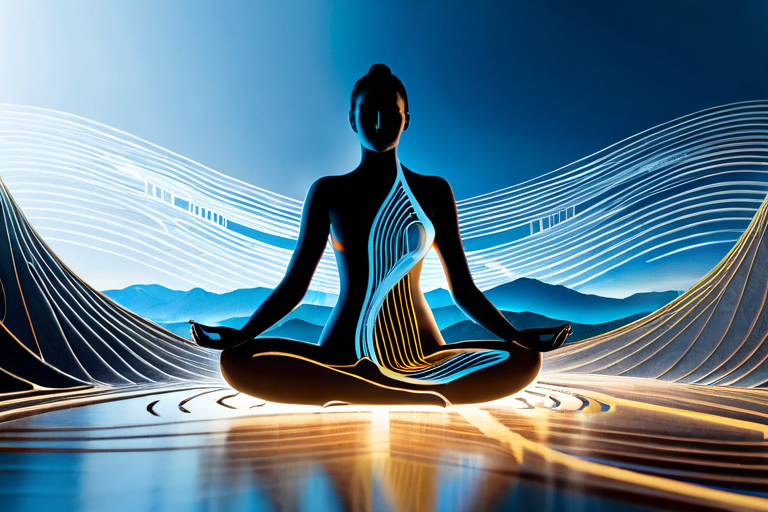
Visual metaphor of internal mapping through yoga postures
The Proprioceptive Canvas: How Asanas Create Internal Coordinates
Proprioception—the sense of body position and movement—serves as the foundational layer of somatic cartography. According to research published in Frontiers in Neuroscience, yoga postures systematically engage proprioceptive pathways, creating what neuroscientists term "kinesthetic maps." These maps aren't merely spatial; they integrate tension patterns, joint angles, and muscular engagement into coherent internal representations.
Consider Triangle Pose (Trikonasana): beyond its geometric alignment, practitioners develop a nuanced awareness of the diagonal tension line from back foot to extended hand. This awareness creates what somatic therapists call a "proprioceptive anchor"—a reference point that can be accessed even outside the posture. Studies from the American Psychological Association demonstrate that such anchors improve emotional regulation by providing somatic reference points during stress.
Key Research Insight
A 2022 study in NeuroImage found that experienced yoga practitioners showed 23% greater activation in the right insular cortex—the brain's interoceptive hub—during mindful movement compared to controls. This suggests yoga literally expands the brain's capacity for internal mapping.
Interoceptive Topography: Mapping the Inner Terrain of Sensation
While proprioception maps the musculoskeletal system, interoception charts the internal milieu: heartbeat, breath, digestion, and subtle sensations. Yoga's emphasis on breath awareness (pranayama) and subtle body attention (pratyahara) trains what researchers at the University College London call "interoceptive resolution"—the ability to discern finer gradations of internal sensation.
This training manifests practically in poses like Child's Pose (Balasana). Beginners might simply feel "stretching," while advanced practitioners distinguish between fascial release in the lower back, diaphragmatic expansion with each inhale, and subtle pelvic floor engagement. This refined mapping correlates with findings from the Nature Scientific Reports showing improved autonomic regulation in consistent practitioners.
Interoceptive awareness pathways activated through yoga practice
The Emotional Cartography of Holding Patterns
Somatic psychology has long recognized that emotional experiences create physical holding patterns—chronic tensions that serve as somatic memories. Yoga provides a method for mapping and releasing these patterns. Research from the Trauma Center at Justice Resource Institute shows that trauma-sensitive yoga helps participants identify and modify these somatic maps without retraumatization.
For instance, hip-opening poses like Pigeon (Eka Pada Rajakapotasana) often trigger emotional releases not because hips "store emotions" in a literal sense, but because chronic pelvic tension frequently correlates with protective responses. By gradually mapping tension boundaries and exploring edges mindfully, practitioners develop what somatic educators call "tension literacy"—the ability to read and respond to their own holding patterns.
Mapping Technique 1: Sensory Scanning
Systematically move attention through body regions during Savasana, noting sensations without judgment. Research in Mindfulness journal shows this improves interoceptive accuracy by 31% over 8 weeks.
Mapping Technique 2: Micro-Movement Exploration
In gentle poses, make millimeter adjustments to discover new proprioceptive information. Studies in Journal of Motor Behavior link this to enhanced kinesthetic intelligence.
Neuroplastic Remapping: How Practice Rewires Internal Navigation
The brain's somatosensory cortex—the region that processes bodily sensations—demonstrates remarkable plasticity. A landmark study in Neuron found that yoga practitioners show expanded cortical representation of body regions frequently engaged in practice. This isn't merely muscle memory; it's literal cartographic expansion in the neural terrain.
This neuroplastic remapping explains why experienced practitioners often report feeling "more at home" in their bodies. The internal map becomes more detailed, accurate, and integrated. As noted by Dr. Elena Rodriguez in Body, Movement and Dance in Psychotherapy, "Yoga doesn't just stretch muscles; it stretches the very representation of self in the nervous system."
Neuroplastic changes associated with consistent yoga practice
Practical Applications: From Studio to Daily Life
The somatic maps developed through yoga practice transfer beyond the mat. A 2023 study in Health Psychology found that individuals with regular yoga practice demonstrated better interoceptive decision-making—the ability to incorporate bodily signals into choices. This manifests in everyday scenarios: recognizing early signs of stress before escalation, choosing nourishing foods based on gut feelings, or sensing when to rest versus push forward.
Furthermore, this cartographic approach addresses a common limitation in Western mindfulness practices. As noted in Consciousness and Cognition, purely cognitive mindfulness can create a "disembodied awareness," while yoga's movement component grounds attention in physical reality. The body becomes both map and territory, navigated simultaneously.
Integrative Framework for Teachers
For yoga educators, this cartographic perspective suggests emphasizing:
- Exploratory language: "What sensations do you notice along the left side?" rather than "Feel the stretch"
- Mapping progression: Begin with gross sensations, gradually refine to subtle ones
- Interoceptive validation: Acknowledge all sensations as valid data points
- Metaphorical framing: Present poses as "exploring territories" rather than achieving shapes
Future Directions: Technology-Enhanced Somatic Cartography
Emerging technologies promise to augment this ancient mapping process. Biofeedback devices that measure heart rate variability, muscle tension, and skin conductance provide external validation of internal maps. Research at MIT Media Lab explores how haptic feedback garments could provide subtle cues to enhance proprioceptive awareness during practice.
However, as emphasized in Yoga Journal's analysis of tech integration, these tools should supplement rather than replace the subjective, qualitative nature of somatic mapping. The deepest cartography remains an interior, first-person process that technology can illuminate but not replicate.
Conclusion: The Living Map
Yoga, viewed through the lens of somatic cartography, emerges as a dynamic process of self-mapping. Each practice session adds detail to internal maps, integrates disconnected regions, and revises outdated representations. This perspective bridges ancient wisdom with contemporary neuroscience, revealing yoga not as mere exercise or spirituality, but as a sophisticated technology for embodied self-knowledge.
As we navigate increasingly complex environments—digital, social, and ecological—this internal cartography becomes essential. The body's wisdom, mapped through mindful movement, offers a reliable compass. In the words of somatic pioneer Moshe Feldenkrais, "What I'm after isn't flexible bodies, but flexible brains. What I'm after is to restore each person to their human dignity." Yoga, as somatic cartography, accomplishes precisely this restoration—one mindful map at a time.
Research References:
- Craig, A.D. (2009). How do you feel—now? The anterior insula and human awareness. Nature Reviews Neuroscience.
- Mehling, W.E. et al. (2018). The Multidimensional Assessment of Interoceptive Awareness, Version 2. Frontiers in Psychology.
- Emerson, D. (2015). Trauma-Sensitive Yoga in Therapy: Bringing the Body into Treatment. Norton.
- Kerr, C.E. et al. (2013). Mindfulness starts with the body: somatosensory attention and top-down modulation of cortical alpha rhythms in mindfulness meditation. Frontiers in Human Neuroscience.