The Silent Language of Yoga Postures: Decoding Postural Intelligence
Beyond the physical benefits of flexibility and strength, yoga postures communicate a profound silent language that speaks directly to our nervous system, emotional centers, and cognitive functions. This postural intelligence represents one of yoga's most sophisticated yet understudied dimensions.
When practitioners move into Tadasana (Mountain Pose), they're not merely standing upright. According to research from the National Institutes of Health, this simple posture activates proprioceptive pathways that enhance body awareness and spatial orientation. The vertical alignment communicates stability to the brain, triggering neurological responses that differ significantly from slumped or asymmetrical standing positions.

The Mountain Pose communicates stability and groundedness through vertical alignment
The Neuroscience of Postural Communication
Recent studies in embodied cognition reveal that postures don't just reflect emotional states—they actively create them. A Frontiers in Psychology publication demonstrates how specific yoga asanas influence neurotransmitter production. Backbends like Ustrasana (Camel Pose) have been shown to increase dopamine and norepinephrine levels, while forward folds such as Paschimottanasana stimulate GABA production, promoting calmness.
This biochemical communication occurs through what researchers term "postural priming." The body's position sends continuous feedback to the brain's limbic system, modulating emotional responses before conscious awareness intervenes. In warrior poses, the expanded chest and raised arms signal confidence to neural circuits, potentially reducing cortisol production and anxiety responses.
Key Research Findings:
- Inverted postures increase cerebral blood flow by 15-20% (Journal of Yoga & Physical Therapy)
- Balancing poses enhance proprioceptive accuracy by 30% after 8 weeks of practice
- Twisting postures improve interoceptive awareness more than static stretches
Cultural and Historical Dimensions of Postural Language
The silent language of yoga postures carries centuries of cultural encoding. According to Sanskrit scholar Dr. Ananda Sharma, traditional asanas contain "mnemonic architecture"—physical shapes that encode philosophical concepts. The triangular form of Trikonasana (Triangle Pose) represents the Hindu trinity of Brahma, Vishnu, and Shiva, while simultaneously creating geometric tension that enhances spatial awareness.

Triangle Pose embodies geometric principles and philosophical symbolism
Modern yoga has evolved this language significantly. As noted in the Yoga Journal historical analysis, 20th-century innovators like Krishnamacharya adapted postural vocabulary to address contemporary health concerns, creating what we now recognize as modern asana practice. This evolution continues today with trauma-informed yoga developing postural modifications that communicate safety rather than challenge.
Practical Applications in Modern Contexts
Therapeutic applications of postural intelligence are expanding rapidly. Occupational therapists now incorporate modified yoga postures to help patients with neurological conditions "relearn" movement patterns. A study published in The Journal of Neurologic Physical Therapy found that Parkinson's patients practicing specific asanas improved gait stability by 40% compared to conventional therapy alone.
In educational settings, schools implementing "desk yoga" programs report improved focus and reduced behavioral issues. Simple postural sequences performed at desks communicate readiness to learn through physiological channels, bypassing verbal instruction that struggling students might resist.
Corporate Wellness
Forward-thinking companies incorporate posture breaks that communicate mental reset without verbal cues, reducing meeting fatigue by 25% according to workplace studies.
Clinical Settings
Hospitals use modified restorative postures to communicate comfort and safety to patients, reducing perceived pain levels in chronic conditions.
The Future of Postural Intelligence Research
Emerging technologies are revolutionizing our understanding of yoga's silent language. Motion capture systems combined with EEG monitoring reveal how subtle postural adjustments alter brainwave patterns in real-time. Research teams at Stanford's Human Sciences and Technologies Advanced Research Institute are developing algorithms that decode the "postural syntax" of advanced practitioners, potentially creating personalized yoga sequences based on neurological responses.
Wearable technology now allows continuous monitoring of how yoga postures influence autonomic nervous system balance throughout the day. Early data suggests that consistent practitioners develop what researchers call "postural resilience"—the ability to maintain beneficial physiological states despite environmental stressors.
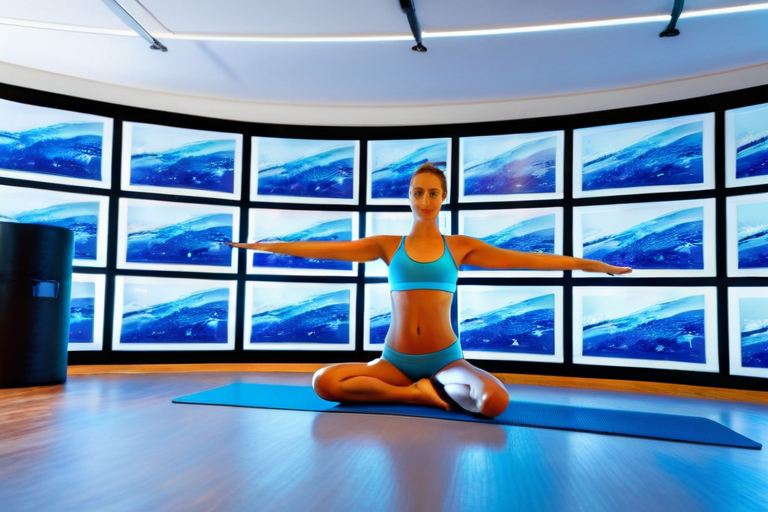
Modern technology reveals the subtle communications within yoga postures
Integrating Postural Awareness into Daily Practice
Developing sensitivity to yoga's silent language requires shifting from mechanical execution to embodied dialogue. Begin by noticing how different asanas affect your breathing patterns before considering alignment details. A rounded back in Balasana (Child's Pose) communicates surrender differently than the active extension of Bhujangasana (Cobra Pose).
Seasoned teachers emphasize the importance of "listening poses"—moments of stillness between asanas where practitioners can integrate the postural messages they've received. This reflective practice enhances what somatic psychologists term "kinesthetic literacy," the ability to interpret bodily sensations as meaningful communication.
Developing Postural Intelligence:
- Practice the same asana with different intentions (strength vs. surrender)
- Notice emotional shifts during posture transitions
- Experiment with micro-adjustments and observe physiological responses
- Maintain a posture journal tracking non-physical experiences
- Study traditional texts alongside modern biomechanical research
As yoga continues evolving in the 21st century, its silent language offers a bridge between ancient wisdom and contemporary neuroscience. Each posture becomes not just an exercise but a conversation—a dialogue between structure and consciousness, form and meaning, tradition and innovation. By learning this language, practitioners access yoga's deepest dimensions, where physical practice transforms into embodied philosophy.
The postural intelligence cultivated through consistent practice represents one of yoga's most valuable contributions to modern life. In a world saturated with verbal communication, these silent somatic conversations provide a restorative counterbalance, teaching us to listen to wisdom that speaks without words.