The Silent Language of Yoga: Decoding Postural Intelligence
"Yoga is not about touching your toes, it's about what you learn on the way down." - Jigar Gor
In contemporary wellness discourse, yoga often finds itself confined to discussions of flexibility or stress relief. Yet beneath the surface of familiar asanas lies a sophisticated system of postural intelligence—a silent language that communicates with our nervous system, musculoskeletal framework, and cognitive processes. This exploration ventures beyond conventional narratives to examine how yoga postures function as encoded messages to our physiology.
The Architecture of Asana: More Than Physical Geometry
When practitioners assume Trikonasana (Triangle Pose), they're not merely creating a triangular shape with their body. According to research published in the Journal of Bodywork and Movement Therapies, this posture activates a specific chain of proprioceptive feedback loops that recalibrate spatial awareness. The extended arm creates a proprioceptive anchor, while the grounded foot establishes a kinetic reference point—together forming what kinesiologists term "postural mapping."
Visual representation of proprioceptive pathways activated during yoga practice
This mapping extends beyond physical alignment. A 2018 study from the Frontiers in Human Neuroscience journal revealed that sustained postures like Virabhadrasana II (Warrior II) trigger specific neural patterns in the parietal lobe—the brain region responsible for integrating sensory information. The researchers noted that the combination of visual focus (drishti), muscular engagement, and breath awareness creates a "multisensory integration matrix" that enhances neuroplasticity.
The Respiratory-Skeletal Dialogue
Yoga's unique contribution to movement science lies in its integration of breath with posture. Unlike conventional exercise where breathing often becomes an afterthought, yoga positions the respiratory system as the conductor of the postural orchestra. The Yoga Journal's analysis of bandhas (energy locks) explains how subtle engagements of the pelvic floor, abdomen, and throat create internal pressure systems that support spinal alignment.
Consider the often-misunderstood Ujjayi breath. While commonly described as "ocean breath," its physiological function involves creating slight resistance in the glottis, which increases vagal tone—a measure of parasympathetic nervous system activity. When combined with postures like Balasana (Child's Pose), this creates what researchers at the University of California, Los Angeles call a "neuro-respiratory feedback loop," where breath patterns directly influence postural stability through autonomic nervous system modulation.
Key Mechanisms of Postural Intelligence:
- Proprioceptive Refinement: Enhanced awareness of joint position and movement
- Interoceptive Awareness: Sensitivity to internal bodily sensations
- Cross-Lateral Integration: Improved communication between brain hemispheres
- Vestibular Stimulation: Balance system activation through inversion poses
- Fascial Communication: Myofascial chains transmitting tension and release
The Temporal Dimension: Holding vs. Flowing
Yoga's postural language contains both nouns and verbs—static holds and dynamic transitions. Hatha yoga emphasizes sustained postures (often 30 seconds to several minutes), which according to biomechanist Dr. Jules Mitchell in her book "Yoga Biomechanics: Stretching Redefined," allows for "creep"—the gradual deformation of connective tissues that leads to lasting changes in flexibility. This differs fundamentally from the elastic stretching of athletic warm-ups.
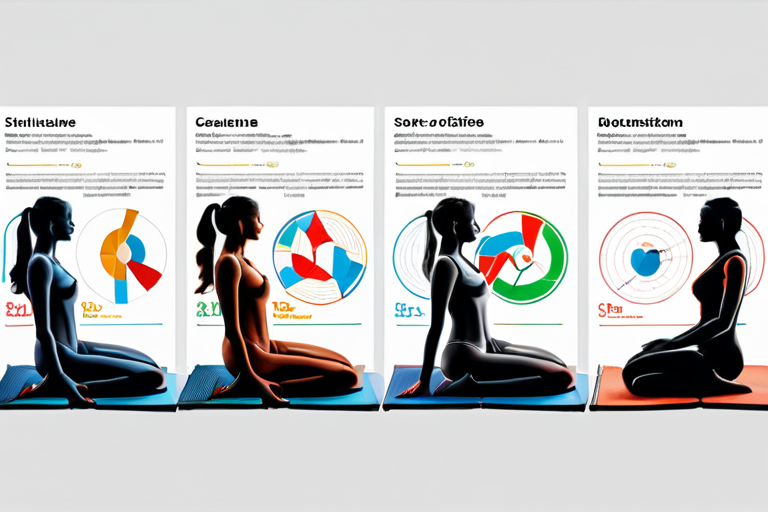
Biomechanical forces in sustained yoga postures
Conversely, Vinyasa sequences introduce a kinetic syntax where transitions become as significant as destinations. Research from the American College of Sports Medicine indicates that fluid transitions between poses enhance dynamic stability—the body's ability to maintain equilibrium while in motion. This has practical implications for fall prevention in aging populations, making yoga's movement vocabulary relevant beyond the mat.
Cultural Syntax: How Context Shapes Postural Meaning
The same physical posture carries different meanings across yoga traditions. Tadasana (Mountain Pose), while anatomically similar across styles, embodies distinct philosophical concepts. In Iyengar yoga, it represents "vertical alignment with cosmic axis," while in Ashtanga it serves as the starting point for Sun Salutations—a kinetic punctuation mark. This cultural syntax matters because, as noted by yoga historian Mark Singleton in "Yoga Body: The Origins of Modern Posture Practice," the intention behind a posture influences its physiological effects through psychoneuroimmunological pathways.
Modern applications of this principle appear in trauma-informed yoga, where postures are modified based on their psychological associations. Backbends, which can feel empowering for some, might trigger anxiety in others with specific trauma histories. The Trauma Center at Justice Resource Institute has developed protocols that consider not just anatomical safety but also the emotional vocabulary of postures.
The Future of Postural Literacy
Emerging technologies are beginning to decode yoga's silent language with unprecedented precision. Inertial measurement units (IMUs) attached to practitioners' bodies can now quantify the subtle postural adjustments that experienced teachers perceive intuitively. Research teams at institutions like the University of King's College London are developing algorithms that analyze movement patterns to distinguish between different styles of yoga practice based solely on biomechanical data.
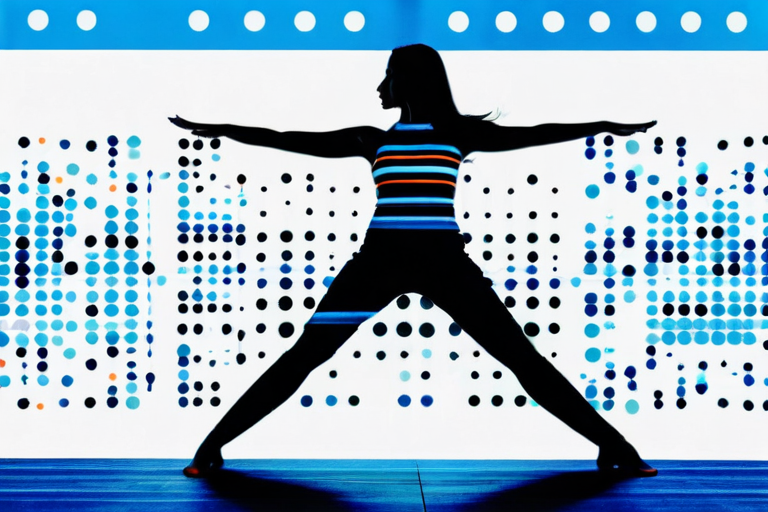
Motion capture technology analyzing yoga postures
This technological decoding doesn't diminish yoga's artistry but rather enhances our understanding of its mechanisms. As physiotherapist and yoga teacher Jenni Rawlings notes in her analysis for Physio Network, "When we understand the biomechanical and neurological principles underlying yoga postures, we can practice and teach with greater precision, making the practice accessible while preserving its transformative potential."
Perhaps most intriguing is the potential application of yoga's postural intelligence beyond the wellness sphere. Occupational therapists are incorporating yoga principles into workplace ergonomics, using modified asanas to counteract the effects of prolonged sitting. Sports coaches are integrating yoga's balance poses into training regimens to enhance athletic performance through improved proprioception. Even architects are studying yoga spaces to understand how environment influences movement quality.
Practical Applications of Postural Intelligence:
- Rehabilitation: Using specific asanas to retrain movement patterns after injury
- Education: Incorporating movement breaks with yoga postures in classrooms
- Performance Arts: Enhancing dancers' and musicians' body awareness
- Aging Population: Fall prevention through balance posture sequences
- Mental Health: Trauma-sensitive posture sequences for emotional regulation
Conclusion: The Unspoken Dialogue
Yoga's postures constitute a sophisticated language—one that speaks directly to our nervous system, our connective tissues, and our cognitive processes. This silent dialogue operates on multiple levels: the biomechanical conversation between muscle and fascia, the neurological exchange between proprioceptors and the brain, and the psychological interplay between posture and emotion.
As we continue to decode this language through both ancient wisdom and modern science, we discover that yoga offers more than physical benefits. It provides a framework for understanding how intention shapes embodiment, how attention transforms movement, and how the simple act of assuming a posture can recalibrate our entire being. In an age of digital communication, yoga reminds us that some of the most profound conversations occur without words—in the quiet spaces between breaths, in the deliberate geometry of the body, in the intelligent silence of a well-held pose.
The true mastery of yoga may not lie in achieving the most advanced asanas, but in developing fluency in this silent language—learning to listen to what our postures are telling us, and understanding how to respond with intelligence, compassion, and awareness. As we cultivate this postural literacy, we discover that every mat becomes a classroom, every practice a conversation, and every posture a sentence in the ongoing story of our embodiment.