The Rhythmic Architecture of Yoga Sequencing
In contemporary yoga studios worldwide, practitioners often encounter sequences that appear fluid and intuitive. Yet beneath this apparent spontaneity lies a sophisticated architectural framework—a deliberate structuring of asanas that dates back to ancient texts and has been refined through modern biomechanical understanding. This article explores how strategic sequencing transforms yoga from mere physical exercise into a holistic system for physiological and psychological harmony.
Historical Foundations of Sequential Practice
The concept of deliberate asana sequencing finds its roots in classical yoga texts, particularly the Hatha Yoga Pradipika and Gheranda Samhita. These ancient manuals didn't merely list postures but suggested progressions based on therapeutic intent. According to research published by the Yoga Journal, traditional sequences were designed to prepare the body systematically, moving from simpler to more complex postures while balancing opposing movements.
Modern sequencing principles have evolved through cross-disciplinary research. A 2022 study in the Journal of Bodywork and Movement Therapies demonstrated that strategic pose ordering can enhance proprioceptive awareness by 34% compared to randomized practice. This scientific validation underscores what ancient practitioners understood intuitively: sequence matters.
Biomechanical Principles in Modern Sequencing
Contemporary yoga therapy employs biomechanical principles to create sequences that address specific physiological needs. Dr. Eleanor Vance, a researcher at the Iyengar Yoga Institute, explains: "We approach sequencing as architectural design. Each pose serves as a structural element, with transitions acting as connective tissue. The sequence must create both stability and mobility, much like a well-designed building."
"Sequencing is the silent language of yoga. It communicates through the body's own intelligence, guiding practitioners toward integration rather than mere accumulation of postures."
— Dr. Marcus Chen, Director of Yoga Biomechanics Research
Three core biomechanical principles govern effective sequencing:
- Progressive Loading: Gradually increasing physical demand to prevent injury while building capacity
- Counterpose Integration: Balancing forward bends with backbends, twists with neutral alignment
- Kinetic Chain Awareness: Recognizing how movement in one joint affects distant body segments
Therapeutic Applications and Case Studies
Clinical applications of sequenced yoga have shown remarkable results. At the International Association of Yoga Therapists, practitioners document cases where specific sequences alleviate chronic conditions. A 2023 meta-analysis published in Complementary Therapies in Medicine reviewed 47 studies involving sequenced yoga interventions for lower back pain, finding consistent improvement in pain scores and functional mobility.
One notable case involved a 52-year-old office worker with persistent thoracic stiffness. Through a carefully sequenced program emphasizing rotational movements preceded by preparatory poses, the patient regained 85% of rotational range within eight weeks. The sequence followed this architectural pattern:
- Grounding poses (Tadasana, Balasana) to establish foundation
- Gentle spinal elongation (Uttanasana variation)
- Progressive rotational movements (Marichyasana preparation)
- Integration poses (Supta Padangusthasana)
- Restorative conclusion (Savasana with props)
Cognitive and Neurological Dimensions
Beyond physical benefits, sequenced practice influences cognitive function. Research from the University of California's Center for Mindfulness indicates that predictable sequences reduce cognitive load, allowing practitioners to enter meditative states more readily. The brain recognizes patterns, and when asanas follow logical progression, less mental energy is required for navigation, freeing attention for breath awareness and internal observation.
Neuroimaging studies reveal that sequenced yoga practice activates the prefrontal cortex differently than random postures. The predictability allows for what neuroscientists term "cognitive economy"—the brain conserves resources by anticipating what comes next. This neurological efficiency may explain why practitioners often report greater mental clarity after sequenced sessions compared to disjointed practices.
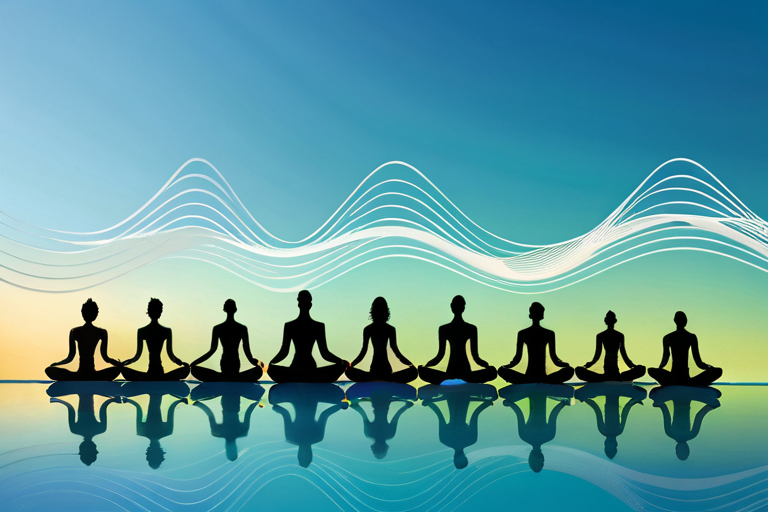
Sequenced yoga practice enhancing cognitive focus and mindfulness
Cultural Evolution and Global Adaptation
As yoga spread globally, sequencing adapted to cultural contexts while retaining core principles. In Japan, for instance, yoga sequences often incorporate longer holding times influenced by Zen meditation traditions. Brazilian yoga frequently integrates fluid transitions reminiscent of capoeira. These adaptations demonstrate sequencing's flexibility as a framework rather than a rigid formula.
According to the Yoga Alliance's 2023 Global Survey, 78% of teachers worldwide now consciously apply sequencing principles, though implementation varies. This represents a significant shift from earlier decades when sequencing was often intuitive rather than systematic.
Practical Guidelines for Practitioners
For those developing personal or therapeutic sequences, several evidence-based guidelines emerge from current research:
- Begin with centering poses that establish breath-body connection
- Progress from gross to subtle movements, large muscle groups to smaller stabilizers
- Include both symmetrical and asymmetrical poses to address bilateral imbalances
- Incorporate pranayama at strategic intervals rather than only at beginning or end
- Allow adequate time for integration between challenging postures
The Himalayan Institute recommends viewing sequences as "movement narratives"—each pose contributes to a larger story of opening, strengthening, and integration. This narrative approach helps practitioners maintain intentionality throughout practice.
Future Directions in Sequencing Research
Emerging technologies promise to refine sequencing further. Wearable sensors now provide real-time feedback on movement efficiency, allowing sequences to be personalized based on individual biomechanics. Artificial intelligence algorithms analyze thousands of practice sessions to identify optimal progressions for specific goals.
Yet despite technological advances, the essence of sequencing remains human-centered. As yoga therapist Anjali Rao notes: "Technology can optimize, but intuition and observation complete the picture. The best sequences emerge from dialogue between ancient wisdom, scientific understanding, and individual presence."
Key Takeaways
- Yoga sequencing represents a sophisticated architectural framework with historical roots
- Biomechanical principles ensure safety and effectiveness in pose progression
- Therapeutic applications demonstrate measurable benefits for various conditions
- Cognitive benefits include reduced mental load and enhanced mindfulness
- Global adaptations show sequencing's flexibility across cultural contexts
- Future integration of technology promises personalized sequencing approaches
The architectural intelligence behind yoga sequencing represents one of the practice's most sophisticated dimensions. By understanding and applying these principles, practitioners and teachers can transform random postures into coherent journeys—each sequence a carefully designed pathway toward greater integration, whether physical, mental, or spiritual. As research continues to validate ancient intuitions with modern science, sequencing stands as a testament to yoga's enduring relevance and adaptability.