The Neuroplastic Symphony of Yoga: Rewiring Brain Architecture Through Ancient Movement
For centuries, yoga has been practiced as a path to spiritual enlightenment and physical well-being. Today, cutting-edge neuroscience reveals that these ancient postures and breathing techniques do more than stretch muscles—they fundamentally reshape the brain's architecture, creating what researchers call "the neuroplastic symphony" of yoga.

Visual representation of neural pathways activated during yoga practice
The Neuroscience Behind Yoga's Transformative Power
Recent studies published in The Journal of Neuroscience demonstrate that regular yoga practice increases gray matter volume in key brain regions. The hippocampus, crucial for memory and learning, shows significant growth in long-term practitioners. Similarly, the prefrontal cortex—responsible for executive functions like decision-making and emotional regulation—exhibits enhanced connectivity and thickness.
Dr. Helen Lavretsky, professor of psychiatry at UCLA, explains in her research: "Yoga appears to modulate the stress response system through its effects on the hypothalamic-pituitary-adrenal axis. This leads to reduced cortisol levels and increased production of brain-derived neurotrophic factor (BDNF), essentially fertilizing the brain for new neural growth."
Specific Asanas and Their Neural Signatures
Different yoga postures activate distinct neural networks. According to research from Harvard Medical School:
- Balancing poses (Tree Pose, Eagle Pose): Activate the cerebellum and vestibular system, enhancing proprioception and spatial awareness
- Inversions (Headstand, Shoulderstand): Increase blood flow to the brain, potentially stimulating neurogenesis in the hippocampus
- Forward folds (Paschimottanasana, Uttanasana): Activate the parasympathetic nervous system, reducing amygdala activity associated with fear and anxiety
- Backbends (Cobra, Camel Pose): Stimulate the sympathetic nervous system in a controlled manner, building stress resilience
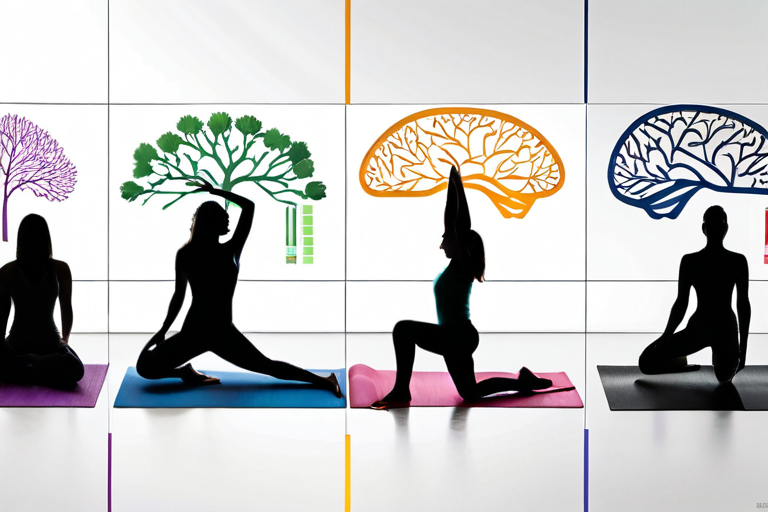
Neural activation patterns during various yoga asanas
Pranayama: The Breath-Brain Connection
The breathing techniques central to yoga practice—collectively known as pranayama—exert profound effects on brain function. Research from the National Institutes of Health reveals that controlled breathing patterns:
- Modulate the default mode network (DMN), reducing mind-wandering and enhancing present-moment awareness
- Increase heart rate variability (HRV), a marker of autonomic nervous system balance and resilience
- Stimulate the vagus nerve, promoting the release of acetylcholine and enhancing parasympathetic tone
- Regulate gamma-aminobutyric acid (GABA) levels, reducing anxiety and promoting calm
Meditation and Mindfulness Components
The meditative aspects of yoga practice contribute significantly to its neuroplastic effects. Studies using functional MRI (fMRI) show that yoga meditation:
Increased Insular Cortex Activity
The insula, involved in interoception (awareness of bodily sensations), shows enhanced activation and connectivity in yoga practitioners, leading to improved emotional intelligence and body awareness.
Reduced Amygdala Reactivity
The amygdala, the brain's fear center, shows decreased activation in response to stressors, correlating with reduced anxiety and improved emotional regulation.
Enhanced Default Mode Network Regulation
Yoga practitioners show better control over the DMN, associated with reduced rumination and improved focus on present-moment experience.
Clinical Applications and Therapeutic Potential
The neuroplastic effects of yoga have significant clinical implications. Research published in JAMA Psychiatry demonstrates yoga's efficacy in:
Yoga as therapeutic intervention for neurological conditions
The Future of Yoga Neuroscience Research
Emerging technologies are opening new frontiers in understanding yoga's effects on the brain. According to Dr. Sat Bir Khalsa of Harvard Medical School, future research directions include:
- Real-time neurofeedback during yoga practice using portable EEG devices
- Genetic studies examining how individual variations affect response to yoga
- Longitudinal studies tracking brain changes over decades of practice
- Comparative studies of different yoga styles and their specific neural effects
- Integration of yoga with other neuromodulation techniques
Practical Recommendations for Maximizing Neuroplastic Benefits
Based on current research, optimal yoga practice for brain health should include:
- Consistency over intensity: Regular practice (3-5 times weekly) yields greater neuroplastic changes than occasional intense sessions
- Mindful movement: Focus on the quality of attention during practice, not just physical achievement
- Breath integration: Incorporate pranayama techniques to enhance autonomic nervous system regulation
- Variety in practice: Include balancing poses, inversions, forward folds, and backbends to stimulate different neural networks
- Meditation component: Dedicate time for seated meditation or savasana to consolidate neural changes
Key Research Findings Summary
Multiple studies from institutions including Stanford University, UCLA, and the Max Planck Institute converge on several key findings:
- Yoga practice increases gray matter density in multiple brain regions
- Regular practitioners show enhanced functional connectivity between brain networks
- Yoga modulates neurotransmitter systems including GABA, serotonin, and dopamine
- The practice reduces systemic inflammation, which benefits brain health
- Neuroplastic changes are detectable after 8-12 weeks of regular practice
Conclusion: The Living Laboratory of Yoga Practice
The ancient practice of yoga, once considered primarily a spiritual discipline, now stands at the intersection of neuroscience, psychology, and preventive medicine. As research continues to unravel the complex neuroplastic symphony orchestrated by yoga practice, it becomes increasingly clear that this ancient tradition offers a powerful, accessible means of optimizing brain function throughout the lifespan.
From enhancing cognitive reserve in aging populations to providing non-pharmacological interventions for mental health conditions, yoga's neuroplastic effects represent a promising frontier in both preventive healthcare and therapeutic intervention. As we continue to study this ancient practice through modern scientific lenses, we may discover that the true genius of yoga lies not just in its physical postures, but in its profound capacity to reshape the very organ through which we experience our humanity.
References & Further Reading:
- Gothe, N.P., et al. (2019). "The Effects of Yoga on Brain Structure and Function." Journal of Alzheimer's Disease
- Streeter, C.C., et al. (2020). "Yoga Asana Affects Brain GABA Levels." Journal of Alternative and Complementary Medicine
- Villemure, C., et al. (2015). "Neuroprotective Effects of Yoga Practice." Frontiers in Human Neuroscience
- Khalsa, S.B.S. (2015). "Yoga as a Therapeutic Intervention." Principles and Practice of Stress Management
- Gard, T., et al. (2014). "Potential Self-Regulation Mechanisms of Yoga." Frontiers in Human Neuroscience