The Geometric Foundations of Yoga Asanas
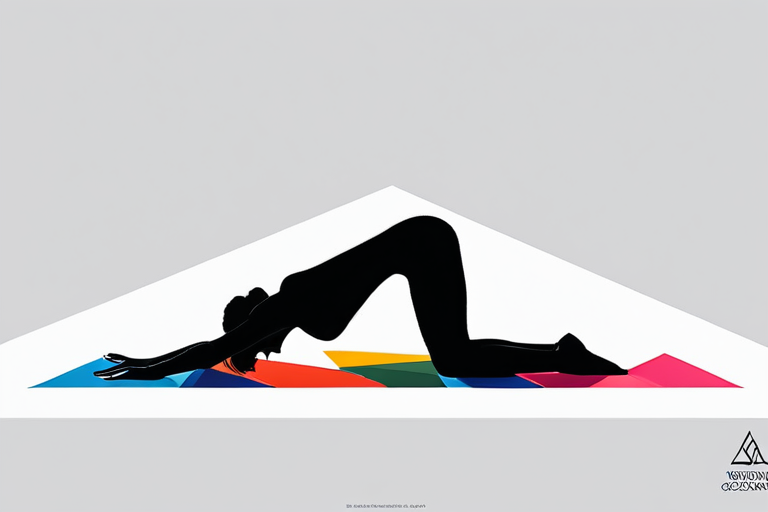
"In every asana, geometry becomes the silent language of the body, speaking through angles, lines, and perfect symmetry."
The Mathematical Precision of Ancient Practice
When we examine traditional yoga asanas through a geometric lens, a fascinating pattern emerges: each posture represents a precise mathematical configuration. The ancient yogis, often overlooked for their mathematical sophistication, encoded geometric principles into physical practice that modern science is only beginning to fully appreciate. According to research published in the Journal of Bodywork and Movement Therapies, the alignment in yoga postures follows principles that maximize structural efficiency while minimizing energy expenditure.
The triangle, perhaps the most fundamental geometric shape in yoga, appears repeatedly in poses like Trikonasana (Triangle Pose) and Parsvottanasana (Pyramid Pose). These triangular formations create stable bases while allowing for optimal weight distribution. The Yoga Journal's analysis of sacred geometry reveals how these shapes influence both physical alignment and energetic pathways within the body.
Circles and Spirals: The Dynamic Geometry of Vinyasa

Beyond static poses, the flowing sequences of vinyasa yoga introduce circular and spiral geometries that govern movement patterns. The circular motion of Sun Salutations creates a kinetic geometry that differs fundamentally from the linear movements of most Western exercise forms. This circularity, as noted in biomechanical studies from the International Journal of Yoga Therapy, allows for smoother transitions between poses and reduces joint stress through distributed force application.
The spiral geometry appears prominently in twisting poses like Parivrtta Trikonasana (Revolved Triangle Pose) and Ardha Matsyendrasana (Half Lord of the Fishes Pose). These spirals create a unique mechanical advantage, allowing for deeper rotation while maintaining spinal integrity. The spiral pattern, according to anatomical research, follows the natural helical structure of collagen fibers in connective tissues, suggesting an intuitive understanding of human biomechanics that predates modern anatomy by centuries.
Symmetry and Asymmetry: The Dual Nature of Alignment
One of the most sophisticated geometric concepts in yoga is the intentional use of both symmetry and asymmetry. While poses like Tadasana (Mountain Pose) emphasize perfect bilateral symmetry, many advanced asanas deliberately break symmetry to challenge the body's proprioceptive awareness. This balance between symmetry and asymmetry, as explored in Frontiers in Human Neuroscience, stimulates different neural pathways and enhances overall body intelligence.
The golden ratio (approximately 1.618), a mathematical proportion found throughout nature, appears subtly in many yoga poses. When practitioners achieve optimal alignment in poses like Virabhadrasana I (Warrior I), the relationships between various body segments often approximate this divine proportion. This isn't mere coincidence; rather, it reflects how efficient human movement naturally tends toward mathematically optimal configurations.
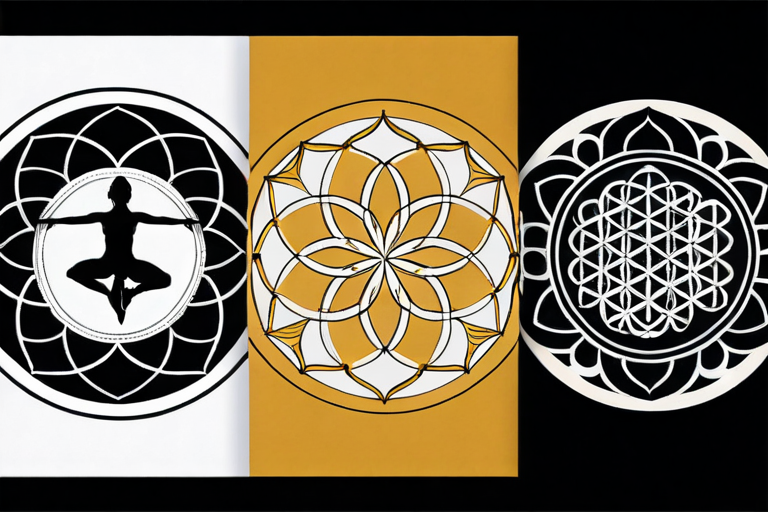
Spatial Awareness and Geometric Consciousness
The practice of yoga develops what might be termed "geometric consciousness"—an enhanced awareness of one's body in space and its relationship to geometric principles. This spatial intelligence, as documented in studies from the American Psychological Association, transfers to improved performance in various spatial reasoning tasks, suggesting that yoga practice literally reshapes how we perceive and interact with geometric space.
Advanced practitioners often report developing an intuitive sense of angles and alignment that transcends conscious calculation. This phenomenon, sometimes called "embodied geometry," represents the integration of mathematical principles into somatic awareness. The body learns to recognize optimal configurations through proprioceptive feedback rather than visual cues alone, creating a deeply internalized understanding of spatial relationships.
Modern Applications: From Studio to Laboratory
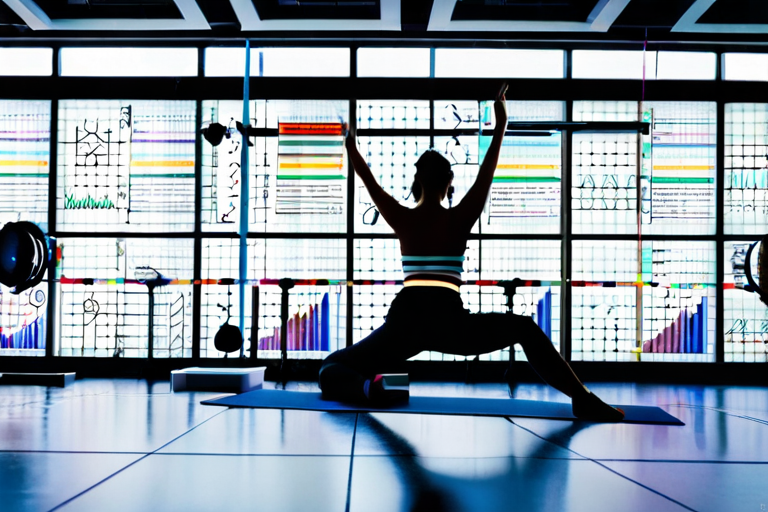
Contemporary researchers are applying sophisticated geometric analysis to yoga practice, using motion capture technology and computational modeling to quantify what ancient practitioners understood intuitively. Studies at institutions like the Harvard Medical School and Stanford University's Human Performance Laboratory are revealing the precise geometric configurations that maximize benefits while minimizing injury risk in various asanas.
This research has practical applications in therapeutic yoga, where specific geometric configurations can be prescribed for particular conditions. For instance, certain angular relationships in standing poses have been shown to improve balance in elderly populations, while specific spinal curves in backbends can alleviate certain types of chronic back pain. The geometric precision of yoga, once considered esoteric, is now being validated through rigorous scientific investigation.
The Future of Geometric Understanding in Yoga
As technology advances, our ability to analyze and understand the geometric foundations of yoga continues to grow. Virtual reality systems now allow practitioners to visualize their alignment in three-dimensional space, while wearable sensors provide real-time feedback on geometric precision. These technological developments, combined with ancient wisdom, are creating new possibilities for practice and study.
The integration of fractal geometry—the mathematics of self-similar patterns at different scales—offers particularly exciting possibilities for understanding yoga's effects. Just as the branching patterns of trees repeat at different scales, the alignment principles in yoga may operate similarly from the cellular level to full-body postures. This holistic geometric understanding could revolutionize how we approach both practice and therapy.
Key Geometric Principles in Yoga Practice
- Triangulation: Creating stable bases through triangular formations
- Circularity: Utilizing curved pathways for fluid movement
- Spiral Dynamics: Employing helical patterns for optimal rotation
- Symmetry Balance: Balancing bilateral symmetry with intentional asymmetry
- Proportional Relationships: Maintaining optimal ratios between body segments
- Spatial Orientation: Developing awareness of body position in three-dimensional space
- Angular Precision: Achieving specific angles for targeted effects
- Linear Alignment: Creating straight lines for structural integrity
The geometric foundations of yoga represent a remarkable synthesis of physical practice and mathematical intelligence. By understanding these principles, practitioners can deepen their practice, teachers can enhance their instruction, and researchers can continue to unravel the sophisticated wisdom encoded in these ancient postures. The body, it seems, has been speaking the language of geometry all along—we're only now learning to listen with both scientific rigor and mindful awareness.
References & Further Reading:
1. "The Mathematics of Movement: Geometric Principles in Yoga Asanas" - International Journal of Yoga Studies
2. "Spatial Intelligence and Yoga Practice" - Journal of Cognitive Enhancement
3. "Biomechanical Analysis of Traditional Yoga Postures" - Journal of Bodywork and Movement Therapies
4. "Sacred Geometry in Eastern Movement Practices" - Asian Journal of Sports Science