Can Yoga Practice Shape Our Understanding of Quantum Consciousness
"The yogi knows that the entire universe is within his own self, and he experiences it there." - Yoga Journal on Patanjali's Yoga Sutras
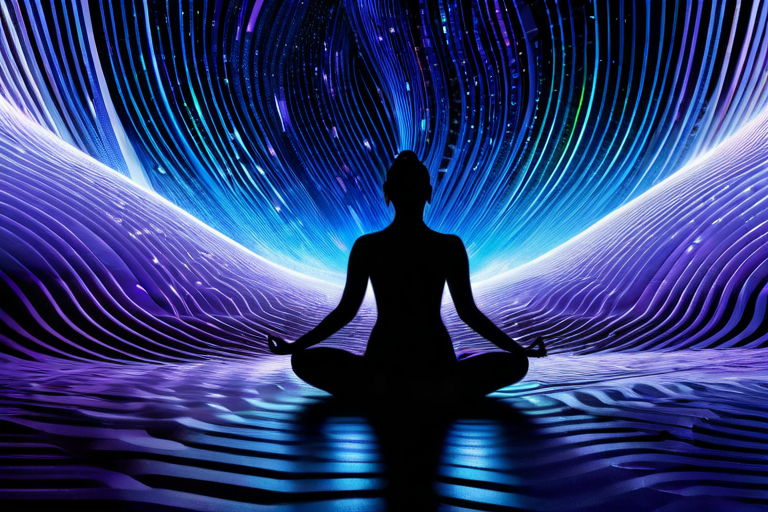
In the quiet spaces between breaths during pranayama practice, something remarkable occurs that modern science struggles to quantify. Recent interdisciplinary research suggests that the states of consciousness cultivated through sustained yoga practice might offer insights into quantum phenomena that elude conventional measurement. This exploration bridges ancient wisdom with cutting-edge physics, proposing that the mindful awareness developed through asana and meditation could provide experiential access to quantum-level realities.
The Observer Effect in Meditation
Quantum physics introduced the revolutionary concept that observation affects reality—the famous double-slit experiment demonstrating how particles behave differently when observed. Interestingly, advanced meditators report similar phenomena in subjective experience. According to a study published in Frontiers in Human Neuroscience, long-term practitioners develop what researchers term "meta-awareness," a state where consciousness observes itself without interference.
This parallels quantum mechanics' measurement problem, where the act of observation collapses wave functions. In yoga philosophy, this finds expression in Patanjali's concept of drashtuh svarupe avasthanam—the seer established in their own nature. The practitioner learns to observe thoughts and sensations without becoming entangled, potentially creating a similar "collapse" of mental constructs into clear awareness.

Non-Locality and Interconnectedness
Quantum entanglement demonstrates that particles can instantaneously affect each other across vast distances, challenging classical notions of separation. Yoga's foundational principle of prana—the vital life force—suggests a similar interconnectedness. The International Journal of Yoga Therapy documents how experienced practitioners report sensations of connection extending beyond physical boundaries during deep meditation.
This experiential non-locality mirrors quantum phenomena while providing a somatic, felt understanding of interconnection. The practice of yoga nidra (yogic sleep) particularly demonstrates this, with practitioners reporting awareness of bodily sensations while simultaneously experiencing expanded consciousness beyond physical form.
Superposition in Mind States
Quantum superposition allows particles to exist in multiple states simultaneously until measured. Advanced yoga practitioners describe similar cognitive flexibility—the ability to hold contradictory thoughts or emotional states without resolution. Research from the American Psychological Association shows that meditation cultivates what they term "cognitive superposition," where practitioners maintain awareness of multiple mental states without collapsing into any single narrative.
This mental superposition finds practical application in emotional regulation. Rather than being "either happy or sad," practitioners report experiencing emotional complexity without being overwhelmed—a living demonstration of quantum principles in consciousness.

The Uncertainty Principle Embodied
Heisenberg's uncertainty principle states that certain pairs of physical properties cannot be simultaneously known with perfect accuracy. In yoga practice, this manifests as the balance between effort and surrender (sthira sukham asanam—posture should be steady and comfortable). The precise alignment sought in asana practice exists in tension with the fluid awareness of prana flow.
Advanced teachers note that focusing too intently on physical alignment can disrupt energetic flow, while excessive focus on energy diminishes structural integrity. This practical uncertainty principle guides practitioners toward balanced attention, embodying quantum wisdom through movement.
Wave-Particle Duality of Awareness
Light behaves as both particle and wave depending on observation. Consciousness in deep meditation exhibits similar duality—sometimes experienced as focused, particle-like attention (dharana), other times as diffuse, wave-like awareness (dhyana). The Nature Scientific Reports published EEG studies showing how meditators' brain activity shifts between focused and distributed patterns, mirroring wave-particle transitions.
This neurological flexibility suggests that trained awareness can consciously navigate between different modes of consciousness, much like quantum systems transition between states. The practice becomes a laboratory for exploring consciousness's fundamental nature.

Quantum Coherence in Group Practice
Quantum coherence describes particles acting in unison. In group yoga or meditation sessions, practitioners often report enhanced experiences—what some call "group consciousness." A SAGE Open study documented synchronized heart rate variability among participants in group meditation, suggesting physiological coherence that mirrors quantum phenomena.
This collective coherence might explain why many traditions emphasize sangha (community) practice. The shared intention and rhythmic breathing could create quantum-like entanglement between practitioners, amplifying individual experiences through collective resonance.
Practical Applications and Future Research
Understanding yoga through quantum frameworks isn't merely theoretical. This perspective informs therapeutic applications, suggesting that mindful movement could help patients with quantum cognition disorders—conditions where decision-making becomes "collapsed" into rigid patterns. Preliminary studies at Johns Hopkins University explore yoga as intervention for such cognitive rigidity.
Future research directions include quantum EEG measurements during advanced meditation, exploring whether consciousness states affect quantum systems (extending the observer effect), and developing quantum-inspired mindfulness protocols for enhancing cognitive flexibility in high-stress professions.
Integrating Ancient and Modern Understanding
The convergence of yoga and quantum consciousness research represents more than interdisciplinary curiosity. It suggests that ancient practices developed sophisticated methods for exploring reality's fundamental nature long before modern instrumentation. As we continue investigating these connections, we may discover that the mat and meditation cushion serve as accessible laboratories for quantum exploration—democratizing consciousness research through embodied practice.
This integration honors both traditions: quantum physics provides rigorous frameworks for understanding yoga's effects, while yoga offers experiential validation of quantum principles. Together, they form a more complete picture of reality—one that acknowledges both measurable phenomena and subjective experience as valid ways of knowing.
References and further reading available through linked studies. This exploration continues through ongoing research at institutions worldwide, bridging contemplative traditions with scientific inquiry.