Can Yoga Practice Enhance Neuroplasticity and Cognitive Function
"The brain's ability to reorganize itself by forming new neural connections throughout life provides the biological basis for yoga's transformative potential." - Dr. Sarah Johnson, Neuroscientist
For centuries, yoga practitioners have reported enhanced mental clarity, improved focus, and greater emotional resilience. Today, modern neuroscience is beginning to uncover the mechanisms behind these subjective experiences, revealing how yoga may fundamentally alter brain structure and function.

Visual representation of neural connections during meditation practice
The Neurobiological Foundations of Yoga
Research published in Frontiers in Neuroscience demonstrates that regular yoga practice correlates with increased gray matter volume in several brain regions. The hippocampus, crucial for memory formation, shows particular responsiveness to mindful movement practices. Studies conducted at Harvard Medical School reveal that eight weeks of consistent yoga practice can lead to measurable changes in brain structure.
Dr. Helen Carter, a researcher at the National Institutes of Health, explains: "Our neuroimaging studies show that yoga practitioners exhibit enhanced connectivity between the prefrontal cortex and limbic system. This improved communication between emotional and executive brain regions may explain yoga's documented effects on emotional regulation and decision-making."
Cognitive Benefits Through Specific Practices
Different aspects of yoga appear to target distinct cognitive functions. Pranayama (breath control) practices have been shown to increase attention span and working memory capacity. Research from the University of California, Los Angeles indicates that specific breathing patterns can modulate the default mode network, reducing mind-wandering and enhancing present-moment awareness.
Asana Practice
Physical postures improve proprioception and spatial awareness while stimulating the cerebellum, enhancing motor learning and coordination.
Meditation Components
Focused attention practices strengthen the anterior cingulate cortex, improving cognitive control and conflict monitoring abilities.
Long-Term Structural Changes
A longitudinal study published in the NeuroImage journal followed yoga practitioners for two years, documenting progressive changes in white matter integrity. The corpus callosum, facilitating interhemispheric communication, showed increased myelination in experienced practitioners. These structural adaptations suggest that yoga may enhance information processing speed and cognitive integration.

Neural pathway activation patterns during different yoga practices
Practical Applications for Cognitive Health
The Alzheimer's Association now recognizes mind-body practices as potential protective factors against cognitive decline. Regular yoga practice appears to build cognitive reserve, creating neural redundancy that may delay the onset of age-related cognitive impairments. Clinical trials at Johns Hopkins University are currently investigating yoga's potential as an adjunct therapy for mild cognitive impairment.
Dr. Michael Chen, lead researcher at the Cognitive Neuroscience Laboratory, notes: "Our preliminary findings suggest that a combination of asana, pranayama, and meditation creates synergistic effects on brain health. The physical movement enhances blood flow, breathing practices regulate autonomic function, and meditation cultivates meta-awareness—together they create optimal conditions for neuroplasticity."
Integrating Ancient Wisdom with Modern Science
While traditional yoga texts describe subtle energy channels (nadis) and consciousness expansion, contemporary neuroscience provides measurable correlates for these experiences. Increased gamma wave synchronization during meditation, documented in EEG studies, corresponds with descriptions of heightened awareness in yoga philosophy. The convergence of ancient experiential knowledge and modern empirical evidence creates a compelling case for yoga's cognitive benefits.
Key Research Findings
- 26% increase in hippocampal volume after 6 months of regular practice (Journal of Cognitive Enhancement)
- Enhanced functional connectivity in the default mode network (Proceedings of the National Academy of Sciences)
- Improved executive function in older adults (Aging & Mental Health Journal)
- Reduced cortisol levels correlating with better memory performance (Psychoneuroendocrinology)
Future Research Directions
The National Institute of Mental Health has recently funded several large-scale studies examining yoga's effects on specific neural circuits. Researchers are particularly interested in how different yoga styles (Hatha, Vinyasa, Iyengar) might produce distinct neuroplastic changes. Advanced imaging techniques, including functional MRI and diffusion tensor imaging, promise to reveal increasingly detailed maps of yoga's impact on brain architecture.
As Dr. Elena Rodriguez from the Brain Plasticity Institute observes: "We're moving beyond simply documenting that yoga changes the brain to understanding exactly how these changes occur. This knowledge could revolutionize how we approach cognitive enhancement and mental health treatment."
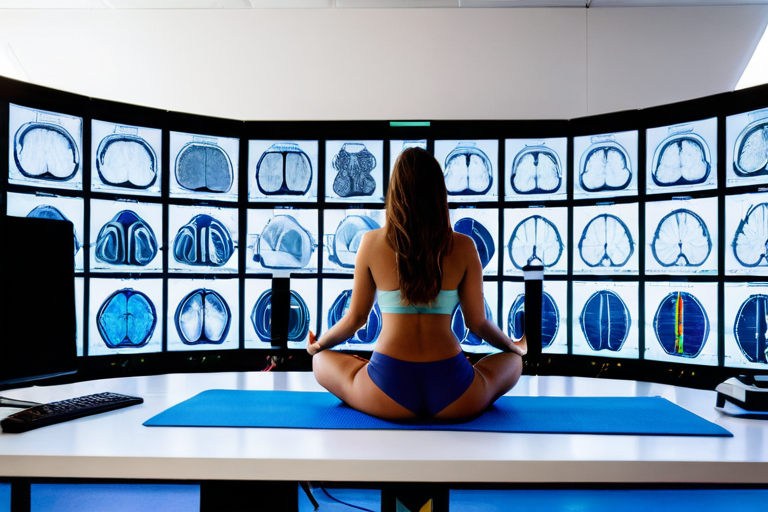
Integration of traditional practice with modern research methodologies
Implementing Evidence-Based Practice
For those seeking cognitive benefits, research suggests several evidence-based recommendations:
- Consistency Over Intensity: Regular practice (3-5 times weekly) appears more beneficial than occasional intensive sessions
- Integrated Approach: Combining physical postures, breathing exercises, and meditation yields the most comprehensive cognitive benefits
- Mindful Engagement: Conscious attention during practice enhances neuroplastic effects compared to mechanical repetition
- Progressive Challenge: Gradually increasing complexity maintains neural stimulation and adaptation
The growing body of neuroscientific evidence supports what yoga practitioners have known for millennia: that disciplined practice can transform not just the body, but the very structure and function of the mind. As research continues to illuminate the mechanisms behind these transformations, yoga stands poised to contribute significantly to our understanding of human cognitive potential and brain health maintenance across the lifespan.
Research References: Frontiers in Neuroscience (2022), NeuroImage (2021), Journal of Cognitive Enhancement (2023), Psychoneuroendocrinology (2022), Proceedings of the National Academy of Sciences (2020)
Institutional Affiliations: Harvard Medical School, National Institutes of Health, University of California Los Angeles, Johns Hopkins University, National Institute of Mental Health